Fall-of-potential method
Where site access and system arrangement allow, this method uses test electrodes and a controlled test current to assess earth resistance.

Check the path to earth
Grounding and earthing tests help assess whether accessible parts of the system have the intended connection to earth and whether measured resistance warrants further attention.
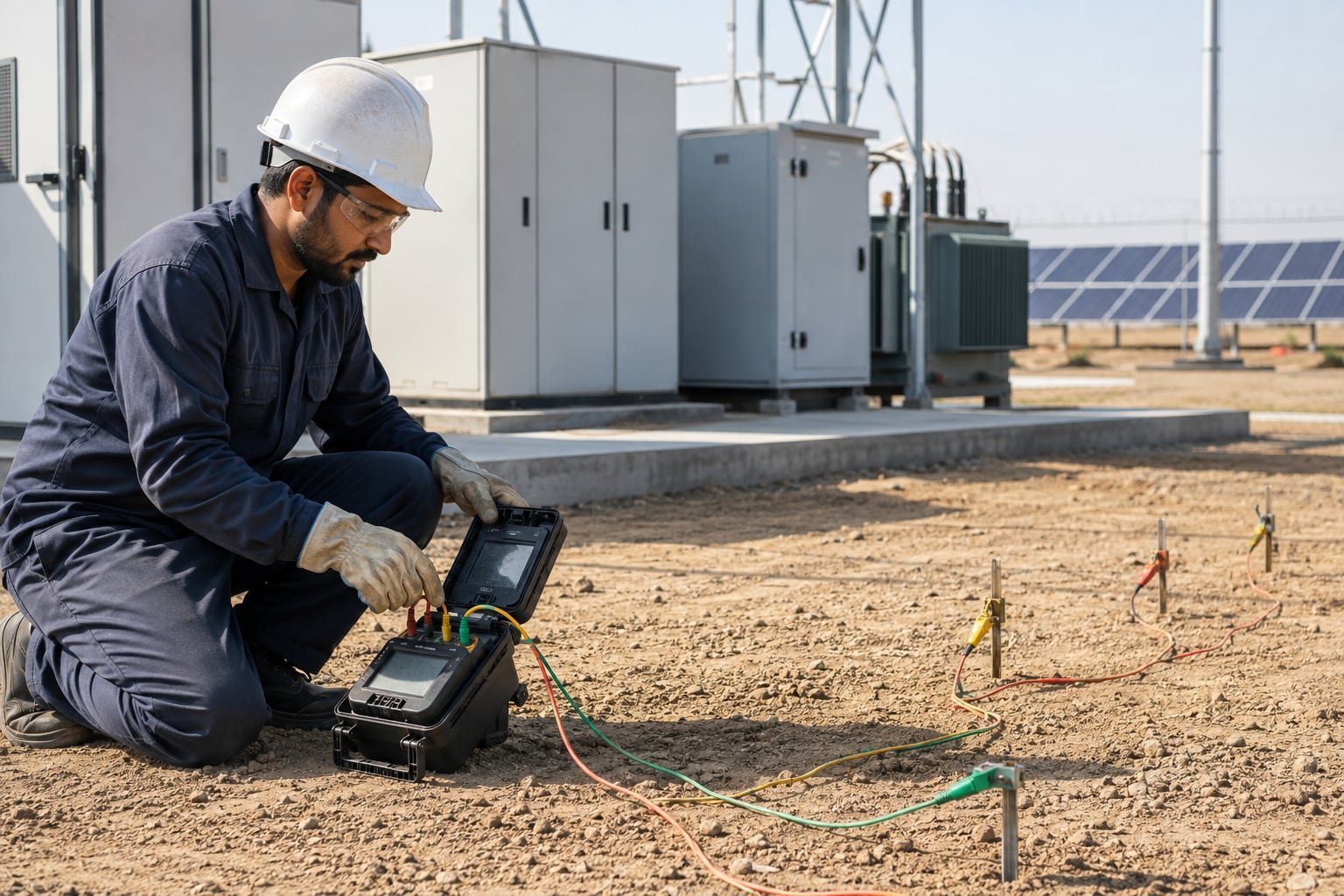
Earth-resistance field testing uses a method and lead arrangement selected for the site and grounding system.
Illustrative field-work imageOverview
The appropriate method depends on the installation, access and test objective. After reviewing the site, we may use a fall-of-potential approach, continuity measurements or another suitable agreed method. Findings are recorded with the test context and any practical limitations.
Important contextTesting may require controlled access, temporary isolation or site preparation. The final method is confirmed after a site and safety review.
Inspection scope
The final method depends on access, system state, safety requirements and the objective agreed before testing.
Grounding system and access review
Test-method selection for the site
Earth resistance measurement where suitable
Continuity checks across agreed points
Recorded readings and follow-up recommendations
How to interpret the service
Where site access and system arrangement allow, this method uses test electrodes and a controlled test current to assess earth resistance.
Continuity checks can help confirm that intended bonding and protective-conductor paths are electrically connected across accessible points.
Where suitable for the installation, loop-impedance measurements can help assess the fault-current path and protective-device operating context.
Grounding and earthing help provide an intended path for fault current. The test method is selected around the system, access and isolation requirements.
Before the site visit
Grounding and earthing provide an intended path for fault current and support electrical protection. Field testing can assess continuity and, where suitable, earth resistance. The method depends on the installation, access and testing objective.
Some observations can be completed while equipment is operating, while other tests require controlled isolation or de-energisation. We identify access, safety and shutdown needs during scoping so the site can plan the work appropriately.
The agreed output can include the scope, relevant site conditions, observations, recorded measurements, supporting images where applicable, limitations and recommended next actions. The exact report format is confirmed before the visit.
Start with a site assessment
Share the system type, site location and condition you need to investigate. We will use that context to shape the next conversation.